
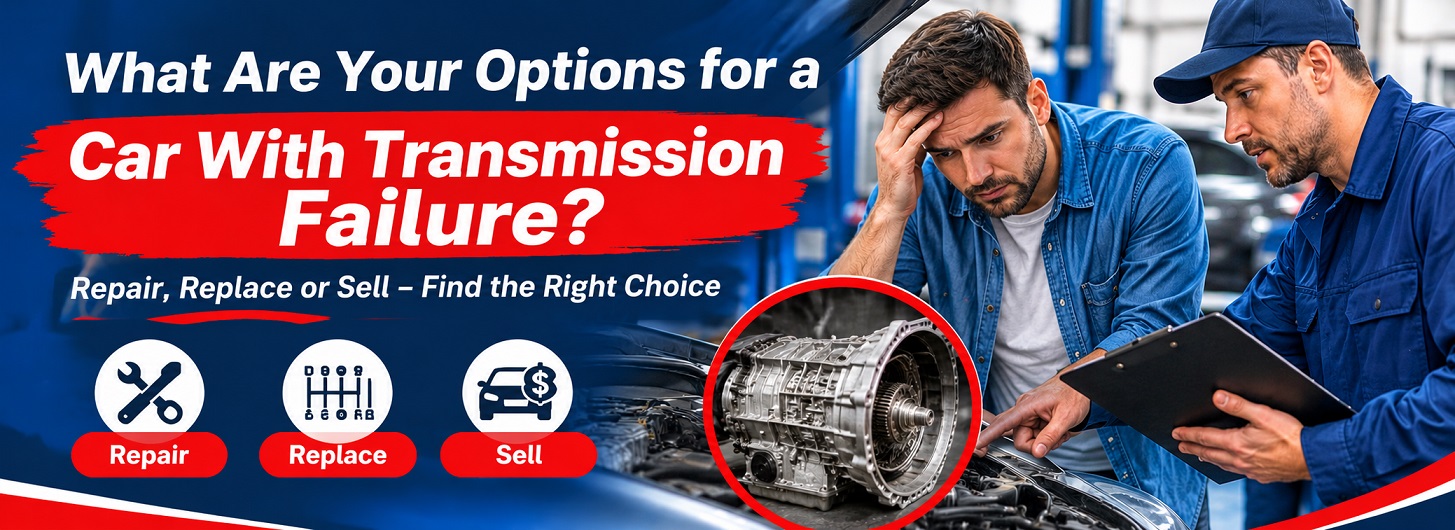
A car can run perfectly well one day and become difficult to drive the next. Sometimes the problem starts with a slight delay when changing gears. Other times, the engine revs but the vehicle barely moves, or the gearbox refuses to engage altogether.
Transmission failure is one of those problems that can leave car owners wondering whether their vehicle is worth saving. Unlike a flat tyre or a minor mechanical fault, gearbox repairs can involve expensive parts, specialist labour and considerable time.
If your car has transmission problems, replacing the gearbox is not necessarily your only option. Depending on the vehicle’s age, overall condition and repair costs, you might be better off fixing the existing transmission, selling the car privately or considering vehicle removal.
Before making a decision, here is what you should understand about transmission failure and the options available to you.
Understanding Transmission Failure
The transmission is responsible for transferring power from the engine to the wheels. It allows the vehicle to change gears and operate at different speeds without putting unnecessary strain on the engine.
Most cars on Australian roads use automatic or manual transmissions, although continuously variable transmissions (CVTs) and dual-clutch systems are also common.
Transmission failure happens when the gearbox or its supporting components stop working correctly. Sometimes the issue is relatively minor, such as a faulty sensor or fluid leak. In other cases, internal damage can prevent the vehicle from moving altogether.
The distinction matters because a gearbox that needs a relatively small repair presents a very different situation from one that requires a complete replacement.
Warning Signs That Your Car’s Transmission Is Failing
Transmission problems do not always appear suddenly. In many cases, the vehicle gives you warning signs before the gearbox stops working completely.
Look out for these common symptoms:
- Delayed gear changes: The vehicle takes longer than usual to respond when shifting between gears.
- Slipping transmission: The engine revs, but the car does not accelerate as expected.
- Unusual noises: Grinding, whining or clunking sounds may indicate mechanical problems.
- Fluid leaks: Transmission fluid leaking underneath the vehicle can affect lubrication and hydraulic operation.
- Burning smell: Overheated transmission fluid or other mechanical problems can produce an unusual smell.
- Loss of movement: The vehicle struggles to engage Drive or Reverse, or cannot move despite the engine running.
- Dashboard warnings: A transmission or check engine warning light may indicate a problem that needs professional diagnosis.
Some symptoms can have causes outside the transmission itself. For example, electrical faults, engine problems and damaged mounts can sometimes produce similar symptoms.
If your vehicle suddenly loses drive, makes severe grinding noises or shows signs of overheating, avoid continuing to drive it. Pull over somewhere safe and arrange professional assistance or towing.
Why Do Transmission Problems Develop?
There is rarely just one reason why a gearbox fails. The cause often depends on the vehicle’s design, maintenance history and driving conditions.
Some common causes include:
- Lack of transmission maintenance: Transmission fluid deteriorates over time. Using incorrect fluid or ignoring manufacturer-recommended servicing can contribute to premature wear.
- Overheating: Excessive heat can damage transmission fluid and internal components. Heavy towing, cooling system problems and demanding driving conditions can contribute to overheating.
- Worn internal components: Clutch packs, gears, bearings and other parts can wear out through regular use.
- Electrical and sensor faults: Modern automatic transmissions rely on electronic controls. Faulty sensors, wiring or solenoids can interfere with normal gear changes.
- Fluid leaks: Damaged seals, hoses or transmission components can allow fluid to escape, potentially affecting gearbox operation.
Identifying the actual cause is important. Replacing an entire transmission without a proper diagnosis can mean spending thousands of dollars on work that might not have been necessary.
Automatic vs Manual Transmission Failure: Is There a Difference?
Yes. Although both transmission types transfer engine power to the wheels, they have different components and failure symptoms.
An automatic transmission manages gear changes using hydraulic pressure, internal clutches and electronic controls. Problems may appear as slipping, delayed engagement, harsh shifting or difficulty selecting gears.
Manual transmissions rely on a clutch and driver-operated gear selection. Common problems include difficulty changing gears, clutch slipping, grinding noises and unusual resistance when selecting a gear.
A worn clutch does not necessarily mean the entire manual gearbox has failed. Similarly, an automatic transmission that changes gears poorly may have a sensor, fluid or control problem rather than extensive internal damage.
This is why a mechanic should inspect the vehicle before you decide whether a major repair is worthwhile.
What Can You Do With a Car That Has Transmission Failure?
Once you understand the likely cause and repair requirements, you can compare the options available.
1. Repair the Existing Transmission
If the problem is limited to a specific component, repairing the existing gearbox may be the most economical option.
For example, a mechanic might discover a leaking seal, faulty solenoid or damaged sensor. Replacing the affected component could restore normal operation without requiring a complete gearbox replacement.
However, the situation changes when internal components are severely worn or damaged.
Before approving repairs, ask your mechanic to explain:
- What exactly has failed?
- Is the damage limited to one component?
- Are additional repairs likely?
- What is the estimated total cost?
- Is there a warranty on the repair?
A detailed diagnosis helps you avoid paying for unnecessary work.
2. Replace the Gearbox
When the existing transmission is beyond economical repair, replacing it may be an option.
Depending on the vehicle, you might be offered a new, used or reconditioned transmission.
A used gearbox can have a lower purchase price, but its history and remaining lifespan may be uncertain. A reconditioned unit may offer more assurance, depending on the quality of the work and warranty provided.
Remember to compare the complete replacement cost, including parts, labour, installation and any additional repairs.
A cheap gearbox does not necessarily mean a cheap repair.
3. Rebuild the Existing Transmission
A transmission rebuild involves dismantling the gearbox, inspecting its internal components and replacing parts that are damaged or excessively worn.
This option can make sense when the vehicle is otherwise in good condition and the transmission can be rebuilt economically.
However, rebuilding is not always practical. Some gearboxes are expensive to work on, and extensive damage can make replacement a better option.
Ask for a detailed quote and clarify what components will be replaced and what warranty applies.
4. Sell the Car Privately
You do not necessarily need to repair a vehicle before selling it.
There are private buyers who look for cars with mechanical problems, particularly mechanics, hobbyists and people who can carry out repairs themselves.
The challenge is finding the right buyer.
Most ordinary buyers want a vehicle they can inspect, test-drive and use immediately. A car with a failed gearbox may attract fewer enquiries, and buyers may negotiate heavily because they are taking on the repair risk.
If you choose this route, advertise the vehicle honestly. Explain the known transmission problem, provide available service records and avoid claiming that the car is roadworthy if it is not.
5. Consider Selling It for Car Removal
Sometimes the repair figures simply do not add up. Imagine you own an older vehicle that is worth approximately $5,000 in good working condition. A mechanic estimates that replacing the transmission will cost $3,500. The car also needs new tyres and has existing suspension problems.
Even after spending the money, you may still be left with an ageing vehicle that could require further repairs. In this situation, selling the car in its current condition may be more sensible than continuing to invest in it.
Car removal services can be an alternative for owners who have vehicles with serious mechanical damage. Depending on the vehicle’s condition, make, model, age and reusable components, it may still have resale or recycling value.
If you are considering this option, car removal in Sydney is worth exploring. Ask the provider whether they accept vehicles with transmission problems, whether collection is available and whether any towing or removal fees apply.
How Much Is a Car With a Failed Transmission Worth?
A failed transmission does not automatically make a car worthless. However, the condition of the gearbox can significantly affect what buyers are willing to pay.
Several factors influence the potential value:
- Make and model: Popular vehicles with readily available spare parts may attract interest from mechanics and automotive recyclers.
- Vehicle age: A relatively new car with a transmission fault may retain more value than an older vehicle with several existing problems.
- Overall condition: The engine, bodywork, interior, tyres and other mechanical components all influence the vehicle’s appeal.
- Type of transmission damage: A minor fault may be considerably less expensive to repair than a completely damaged gearbox.
- Demand for reusable parts: Certain engines, electronic components, body panels and other parts may have value independently of the vehicle’s ability to drive.
For a more realistic assessment, compare the vehicle’s value in working condition with its value in its current damaged state. Do not assume that a vehicle’s original purchase price reflects what someone will pay for it today.
Things to Check Before Selling a Transmission-Damaged Car in NSW
If you decide to sell your vehicle in New South Wales, make sure you understand the paperwork requirements before handing it over.
A few practical steps can help avoid complications:
- Confirm that you are legally entitled to sell the vehicle.
- Gather available registration and ownership documents.
- Disclose any known mechanical problems to the buyer.
- Agree on the price and collection arrangements in writing.
- Remove personal belongings, toll tags and valuables.
- Keep a receipt or other record of the transaction.
There is also an important distinction when selling a vehicle to a wrecker.
According to Service NSW, if you sell a NSW-registered vehicle to a car wrecker with its number plates attached, you need to submit a Notice of Disposal. If you sell it to a wrecker without number plates, you do not need to submit a Notice of Disposal, but you must cancel the registration and return the plates to a Service NSW Centre.
You should also remove the vehicle from your toll account and keep records of the transaction. Check the official Service NSW vehicle disposal guidelines for the current requirements.
Making the Right Decision for Your Vehicle
Transmission failure can be frustrating, especially when you have already spent money maintaining your car. But an expensive gearbox problem does not mean you should automatically approve a replacement or give up on the vehicle.
Start with a proper diagnosis. Find out what has failed, request a repair estimate and compare the total expense with the car’s realistic value after repairs. Consider its age, overall condition and the likelihood of further mechanical problems.
If repairing the transmission makes financial sense, fixing the vehicle may be worthwhile. If the costs are too high, selling it in its current condition could save you from investing more money into an unreliable car.
At NSW Cash for Cars Sydney, vehicle owners can explore options for selling unwanted cars, including vehicles affected by serious mechanical problems. You can visit our website to learn more about the services available and decide whether selling your damaged vehicle is the right next step.