
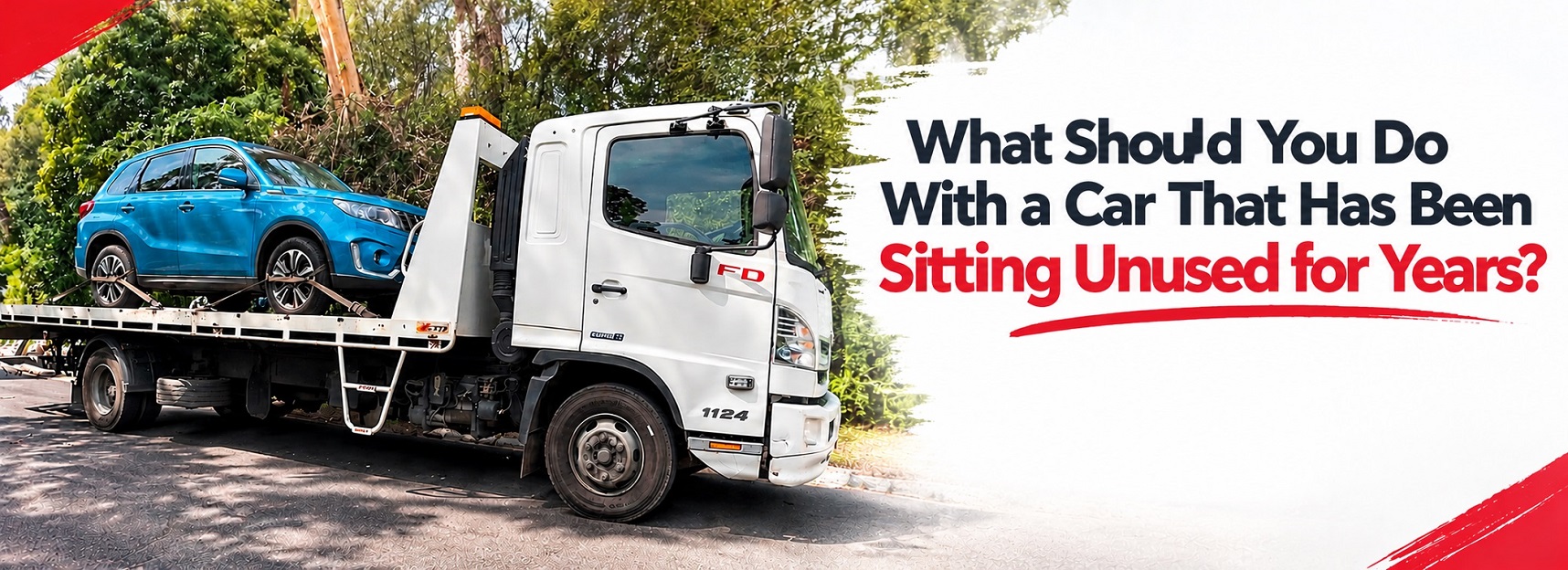
Have you got a car sitting in your garage, driveway or backyard that has not been driven for years? You might be wondering whether it can be started again, whether it is worth repairing, or whether selling it is a better option.
A car that has been sitting unused for years can develop mechanical and electrical problems, even if it was running well when it was last driven. The battery may have failed, the tyres may have deteriorated, old fuel may affect the fuel system, and moisture can cause corrosion.
However, a vehicle that has been unused for a long time is not necessarily beyond repair. Its condition, storage environment, maintenance history and estimated repair costs will help determine what to do next.
This guide explains the common problems associated with long-term vehicle storage, how to assess a car safely and what options are available if you no longer want to keep it.
What Happens When a Car Sits Unused for Years?
When a vehicle remains stationary for an extended period, several components can deteriorate without regular maintenance and use.
1. The Battery May No Longer Hold a Charge
Car batteries gradually lose charge, even when the vehicle is switched off. After several years, the battery may no longer be capable of starting the engine.
Inspect it for cracks, leaks, swelling or significant corrosion. Do not attempt to jump-start or charge a visibly damaged battery. Remember that replacing the battery will not resolve other mechanical problems caused by prolonged storage.
2. Old Fuel Can Affect Engine Performance
Petrol can deteriorate over time, while diesel may become contaminated under unsuitable storage conditions. This can affect starting and fuel system performance.
If the car has been sitting for years with fuel in the tank, avoid repeatedly trying to start the engine. A qualified mechanic can assess the fuel and determine whether the tank or fuel system needs attention.
3. Tyres May Have Deteriorated
Prolonged contact with the ground, temperature changes and pressure loss can affect tyres over time.
Look for cracks, bulges, damage and flat spots. Even tyres with apparently adequate tread may be unsafe if the rubber has deteriorated. Have them inspected and replaced where necessary before driving the vehicle.
4. Brakes May Have Rusted or Seized
Moisture can cause rust to develop on brake components, while parts of the braking system or parking brake may seize during prolonged inactivity.
Do not assume the brakes are safe because the car was working normally before it was parked. Have the braking system inspected before attempting to drive it.
5. Engine Components and Wiring May Be Damaged
Old fluids, deteriorated hoses, leaking seals and corrosion can create additional problems. Rodents may also chew wiring or build nests around the engine bay, potentially causing electrical faults.
Look for visible leaks, damaged wiring, nesting materials and signs of water entry. If you suspect significant damage, arrange a professional inspection before attempting to start the engine.
How to Check a Car That Has Been Sitting Unused
Before deciding whether to restore or sell the vehicle, assess its condition without putting yourself at risk.
Use this basic checklist:
- Exterior: Look for rust, accident damage and signs of water entry.
- Tyres: Check for cracks, bulges and visible deterioration.
- Engine bay: Look for damaged wiring, rodent nests and deteriorated hoses.
- Under the car: Check for visible fluid leaks or corrosion.
- Service history: Find out when the car was last serviced and whether repairs were outstanding.
- Mechanical inspection: Ask a qualified mechanic to assess the engine, fuel system, brakes and fluids before attempting to restart the vehicle.
These visual checks cannot establish whether a car is safe to drive. A vehicle that has been unused for years may need additional work before it can be started safely.
For further information, consult the NSW Government’s vehicle roadworthiness guidance.
Is It Worth Repairing a Car That Has Been Sitting for Years?
The answer depends on the vehicle’s condition, potential market value and likely repair costs.
A car stored in a dry garage may need less work than one exposed to moisture, heat and pests. However, even a vehicle that looks good externally can have hidden mechanical problems.
Before committing to repairs, consider three factors:
- Overall condition: Extensive rust, water damage or major mechanical faults can increase restoration costs.
- Repair estimate: Ask a mechanic for an itemised estimate covering the work required to make the vehicle safe and reliable.
- Current market value: Compare the estimated repair costs with the realistic value of a similar vehicle in comparable condition.
Allow for unexpected repairs, as additional problems may become apparent during inspection. If you want to restore a classic car or keep a vehicle for sentimental reasons, you may also have reasons to spend more than its immediate resale value would justify.
What Can You Do With a Car That Has Been Unused for Years?
Once you understand the vehicle’s condition, you can choose the option that best suits your circumstances.
Restore It and Drive It Again
Restoring the car may be worthwhile if it is in good condition and the required repairs are manageable. Depending on how long it has been stored, it may need servicing, new tyres, brake repairs or attention to the fuel and electrical systems.
Check the applicable registration and inspection requirements before returning it to public roads.
Sell It Privately
Selling privately may be suitable if the vehicle retains value and buyers are interested in repairing it.
Be transparent about how long it has been unused, whether it starts, its registration status and any known faults. Accurate information helps buyers make informed decisions.
Sell It to a Cash for Cars Service
If the vehicle has major mechanical problems or would require extensive repairs, contacting a cash for cars service may be a convenient alternative.
Depending on its condition and location, collection may be possible without getting the vehicle running first. Confirm the offer, collection arrangements, any applicable fees and required paperwork before agreeing to the sale.
If you are considering this option, explore our Sydney cash for cars services to learn more.
Recycle It Responsibly
If the car is beyond economical repair, recycling may allow suitable components and materials to be recovered. Depending on its condition, some parts may be reused, while metals can be processed through appropriate recycling channels.
Batteries, fluids and other materials should be handled through suitable disposal or recycling services.
What Should You Prepare Before Selling an Unused Car?
Gathering a few details can make the selling process easier.
- Vehicle details: Make, model, year and approximate kilometres travelled.
- Condition: Whether the car starts, how long it has been unused and any known faults.
- Service records: Available maintenance history and repair invoices.
- Registration and ownership documents: Relevant information to help establish your entitlement to sell the vehicle and meet applicable requirements.
Before collection, remove personal belongings, documents and toll tags. Confirm the relevant NSW requirements for the sale, registration and transport of your particular vehicle.
If you are considering selling your vehicle, visit our sell my car page to explore your options.
How to Prevent Problems When Storing a Car Long-Term
If you know that your vehicle will remain unused for an extended period, appropriate storage and maintenance can help reduce deterioration.
- Store it in a dry, secure location where possible.
- Keep the storage area clean and reduce the risk of pest activity.
- Follow the manufacturer’s recommendations for battery maintenance.
- Monitor tyre condition and pressure.
- Follow recommended storage procedures for fuel and fluids.
- Arrange periodic inspections rather than leaving the car unchecked for years.
The appropriate precautions depend on the vehicle and its storage conditions. Consult the owner’s manual or a qualified mechanic for advice specific to your car.
Conclusion
A car that has been sitting unused for years may still be worth restoring, but it should not be assumed to be safe or reliable without an assessment.
Start by checking its condition, identifying potential mechanical problems and obtaining a realistic repair estimate. If restoration is practical, you may be able to return the car to regular use. If the required work is extensive, selling it privately, contacting a car removal service or arranging responsible recycling may be more suitable.
For vehicle owners in Sydney and across NSW, understanding these options can help you make an informed decision without spending money unnecessarily.